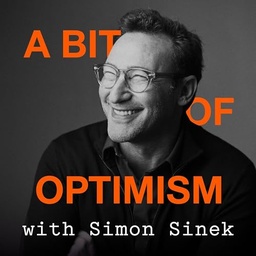
 Simon Sinek
Does Gender Change How We Lead? with retired colonel DeDe Halfhill | A Bit of Optimism Podcast
Simon Sinek and DeDe Halfhill on leadership isn’t gendered; courage, empathy, and vulnerability build trust fastest.
In this episode of Simon Sinek, featuring DeDe Halfhill and Simon Sinek, Does Gender Change How We Lead? with retired colonel DeDe Halfhill | A Bit of Optimism Podcast explores leadership isn’t gendered; courage, empathy, and vulnerability build trust fastest Halfhill argues leadership isn’t “male vs. female,” but social conditioning makes certain traits (empathy, inclusion, communication) more practiced in women and increasingly necessary for modern leadership.
At a glance
WHAT IT’S REALLY ABOUT
Leadership isn’t gendered; courage, empathy, and vulnerability build trust fastest
- Halfhill argues leadership isn’t “male vs. female,” but social conditioning makes certain traits (empathy, inclusion, communication) more practiced in women and increasingly necessary for modern leadership.
- She describes the hidden emotional labor placed on leaders who can “sit in” others’ feelings, noting it consumes real time and is often unevenly demanded of women in male-dominated environments.
- Stories from Iraq illustrate how identical behaviors (e.g., swearing, decisiveness) are judged more harshly when displayed by women because they violate societal expectations.
- A pivotal insight is that many people label their experience as “exhaustion” when the root issue is loneliness and disconnection—an avoidable risk factor in rising suicide rates.
- They frame mental wellness as “mental fitness” and emphasize shame resilience (naming, reality-checking, rewriting the story) and leader vulnerability as the mechanism to normalize hard conversations and build trust.
IDEAS WORTH REMEMBERING
7 ideasStop debating “female leadership” and start prioritizing the traits teams need now.
The conversation reframes the issue: organizations don’t need leaders of a certain gender, they need more empathy, inclusion, and communication—capabilities often socialized more in women but available to anyone.
Gendered expectations change how the same behavior is interpreted.
Halfhill’s examples (being dismissed, accused of “flirting,” investigated for swearing) show that identical actions can be labeled “decisive” in men and “toxic” in women because they violate a perceived behavioral lane.
Emotional labor is real leadership work with real opportunity costs.
Being the person others seek out for support can improve morale and trust, but it also displaces time for visible deliverables; leaders should recognize, distribute, and protect time for this work rather than letting it become an invisible tax.
Loneliness often masquerades as exhaustion—fixing the symptom can worsen the cause.
If the root problem is disconnection, telling someone to “take a day off” may increase isolation; leaders should pair workload relief with connection-building (check-ins, peer support, belonging rituals).
Normalize taboo emotions by having leaders model the language first.
Halfhill’s decision to say “lonely” out loud—and Sinek’s story of a commander publicly attending therapy—illustrate that psychological safety grows when leaders visibly practice what they recommend.
Treat mental wellness like “mental fitness,” not a pass/fail state.
The “fitness” framing reduces stigma and emphasizes ongoing practice, just like physical conditioning, making it easier to admit setbacks and keep engaging supports.
Build shame resilience with a repeatable three-step protocol.
Halfhill’s tool—name the shame story, reality-check it with empathy and curiosity, then rewrite the narrative—turns spirals of self-blame into actionable reflection and healthier performance.
WORDS WORTH SAVING
5 quotes“Leadership is leadership.”
— DeDe Halfhill
“The hardest part for me about being a woman in the military was… the emotional labor.”
— DeDe Halfhill
“It’s not that people are tired, but people are lonely.”
— DeDe Halfhill
“Because fixers… are uncomfortable with your discomfort, I want to fix it.”
— DeDe Halfhill
“The reason we call you leader… is because you went first.”
— Simon Sinek
QUESTIONS ANSWERED IN THIS EPISODE
5 questionsIn your Iraq command, what specific practices helped airmen feel “they matter,” and which ones had the biggest measurable impact on performance?
Halfhill argues leadership isn’t “male vs. female,” but social conditioning makes certain traits (empathy, inclusion, communication) more practiced in women and increasingly necessary for modern leadership.
How can organizations quantify and redistribute emotional labor so it doesn’t disproportionately fall on a few (often women) leaders?
She describes the hidden emotional labor placed on leaders who can “sit in” others’ feelings, noting it consumes real time and is often unevenly demanded of women in male-dominated environments.
Where is the line between “warm, engaging communication” and behavior others mislabel as “flirting,” and how should leaders address that bias directly?
Stories from Iraq illustrate how identical behaviors (e.g., swearing, decisiveness) are judged more harshly when displayed by women because they violate societal expectations.
What are practical ways leaders can reduce loneliness at work without forcing artificial vulnerability or oversharing?
A pivotal insight is that many people label their experience as “exhaustion” when the root issue is loneliness and disconnection—an avoidable risk factor in rising suicide rates.
In your experience, what language or rituals make it safer for predominantly male groups (military, construction, law enforcement) to discuss loneliness?
They frame mental wellness as “mental fitness” and emphasize shame resilience (naming, reality-checking, rewriting the story) and leader vulnerability as the mechanism to normalize hard conversations and build trust.
EVERY SPOKEN WORD
Install uListen for AI-powered chat & search across the full episode — Get Full Transcript
Get more out of YouTube videos.
High quality summaries for YouTube videos. Accurate transcripts to search & find moments. Powered by ChatGPT & Claude AI.
Add to Chrome