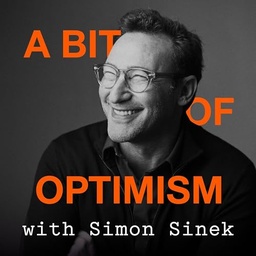
 Simon Sinek
The Cure for Nihilism with professor Suzy Welch | A Bit of Optimism Podcast
Simon Sinek and Suzy Welch on finding purpose to combat nihilism through values, service, and community.
In this episode of Simon Sinek, featuring Suzy Welch and Simon Sinek, The Cure for Nihilism with professor Suzy Welch | A Bit of Optimism Podcast explores finding purpose to combat nihilism through values, service, and community Suzy Welch describes how personal grief and a return to work led her to create NYU Stern’s “Becoming You” course, focused on intentional life design and authentic purpose.
At a glance
WHAT IT’S REALLY ABOUT
Finding purpose to combat nihilism through values, service, and community
- Suzy Welch describes how personal grief and a return to work led her to create NYU Stern’s “Becoming You” course, focused on intentional life design and authentic purpose.
- Welch argues that purpose discovery is difficult, non-“woo-woo” work requiring rigorous self-knowledge—especially clarifying personal values, which most people cannot accurately name.
- The conversation highlights practical outcomes of purpose clarity, including major career pivots (e.g., banking to fashion) and mission-driven entrepreneurship (e.g., ethical office-cleaning services).
- Welch reframes purpose as “transcendence,” combining Maslow’s self-actualization with service, and frames optimism vs. nihilism as a moral choice with social contagion effects.
- They debate luck versus agency and introduce Welch’s “PIE” model for sustained success: relationships, ideas, and execution, with leadership playing a key role in creating meaning at work.
IDEAS WORTH REMEMBERING
9 ideasPurpose work is hard, not mystical.
Welch challenges the idea that purpose is “woo-woo” or easy; she frames it as the brutal, disciplined work of “painting your self-portrait” through deep self-knowledge.
Most people don’t know their values with specificity.
Welch cites research showing only about 7% can identify true values accurately, often confusing values with virtues or skills; her course uses structured exercises to surface and rank them.
Passion without aptitude is a trap; overlap matters.
She distinguishes interests and values from what you can actually do well; sustainable direction comes from aligning values, interests, and aptitudes rather than chasing desire alone.
Purpose equals “transcendence”: self-actualization plus service.
Building on Maslow’s later work, Welch argues purpose is most alive when you’re using your strengths in a way that benefits others—service amplifies self-actualization.
Clarity can mean transformation or a small tweak.
Not everyone must “blow up” their life; some discover they’re close to alignment and only need targeted changes (time allocation, mindset, boundaries, or role design).
Sustained success is driven by PIE, not luck.
Welch’s long-term success model emphasizes relationships, ideas, and execution; she argues luck tends to wash out over time, while agency and integrity compound.
Purpose spreads socially; nihilism is contagious too.
Welch frames optimism as a moral obligation because attitudes and behaviors affect others; Sinek adds a physiological lens—stress and cortisol can harm health and systems.
Purpose is strengthened in community, not isolation.
Welch stopped private coaching because group discovery creates “1+1=12” amplification—people process aloud, learn through others’ stories, and form durable bonds.
Leadership can manufacture meaning, but individuals still have agency.
They agree great leaders help connect repetitive work to a larger good, yet individuals can still choose service (care for coworkers/customers) even in imperfect workplaces.
WORDS WORTH SAVING
7 quotesThe nickname for my class is the class where everyone cries.
— Suzy Welch
7% of people actually can identify with any kind of specificity their values.
— Suzy Welch
My purpose, my area of transcendence, is to dress Kim Kardashian.
— Suzy Welch (quoting a student)
I think we have a moral choice. We can be nihilists or we can be optimists.
— Suzy Welch
We are living our purpose when we are… self-actualizing and giving back.
— Suzy Welch
Your gifts are for giving away.
— Simon Sinek
Ultimately… being a manager is an act of love.
— Suzy Welch
QUESTIONS ANSWERED IN THIS EPISODE
5 questionsWhat are the 15 values in the Welch Bristol Values Inventory, and how does the ranking process work in practice?
Suzy Welch describes how personal grief and a return to work led her to create NYU Stern’s “Becoming You” course, focused on intentional life design and authentic purpose.
How does your 13-step excavation process differ from other purpose/strengths frameworks (e.g., Ikigai, CliftonStrengths), and where does it overlap?
Welch argues that purpose discovery is difficult, non-“woo-woo” work requiring rigorous self-knowledge—especially clarifying personal values, which most people cannot accurately name.
What specific exercises help students separate “parents’ values” or societal scripts from their own authentic values?
The conversation highlights practical outcomes of purpose clarity, including major career pivots (e.g., banking to fashion) and mission-driven entrepreneurship (e.g., ethical office-cleaning services).
When a student has strong interests but weak aptitudes, what decision rules do you teach—do they pivot, build skill, or treat it as a hobby?
Welch reframes purpose as “transcendence,” combining Maslow’s self-actualization with service, and frames optimism vs. nihilism as a moral choice with social contagion effects.
Your claim that nihilism is “morally wrong” is strong—how do you respond to critics who see that as coercive or insensitive to depression and mental illness?
They debate luck versus agency and introduce Welch’s “PIE” model for sustained success: relationships, ideas, and execution, with leadership playing a key role in creating meaning at work.
EVERY SPOKEN WORD
Install uListen for AI-powered chat & search across the full episode — Get Full Transcript
Get more out of YouTube videos.
High quality summaries for YouTube videos. Accurate transcripts to search & find moments. Powered by ChatGPT & Claude AI.
Add to Chrome