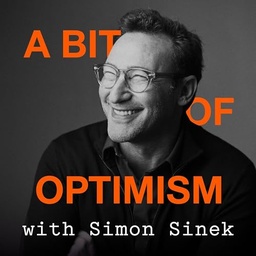
 Simon Sinek
Find Your Allies Fast with philanthropist Melinda French Gates | A Bit of Optimism Podcast
Simon Sinek and Melinda French Gates on navigate life transitions by finding allies and embracing discomfort bravely.
In this episode of Simon Sinek, featuring Simon Sinek and Melinda French Gates, Find Your Allies Fast with philanthropist Melinda French Gates | A Bit of Optimism Podcast explores navigate life transitions by finding allies and embracing discomfort bravely Melinda French Gates frames repeated life changes—leaving a marriage, the Gates Foundation, and starting anew—as transitions that build resilience and reduce fear of future change.
At a glance
WHAT IT’S REALLY ABOUT
Navigate life transitions by finding allies and embracing discomfort bravely
- Melinda French Gates frames repeated life changes—leaving a marriage, the Gates Foundation, and starting anew—as transitions that build resilience and reduce fear of future change.
- They argue that the most reliable form of agency during destabilizing events is choosing who you surround yourself with—people who can hold space rather than “fix” you.
- The conversation highlights gendered patterns in identity and transition, including why moving “toward something” tends to produce healthier next steps than fleeing “away from something.”
- French Gates explains her women-focused philanthropy as an efficiency strategy: investing in women improves outcomes for families, communities, and grant impact.
- They contrast philanthropic and investment mindsets, exploring why philanthropy feels “riskier” to some wealthy donors and how long-horizon capital can disrupt industries like venture funding for women.
IDEAS WORTH REMEMBERING
7 ideasIn transition, your biggest leverage is choosing your people.
Even when you can’t control the event (divorce, job loss, relocation), you can control who walks with you through it—friends/allies who can remind you of your resilience and tolerate uncertainty with you.
Don’t rush the “unknown”; impatience fuels bad next moves.
They warn against jumping to the first “shiny object” to escape discomfort; taking time (even months) to reflect can prevent misaligned jobs, relationships, or commitments.
Move toward something, not merely away from something.
Transitions are healthier when anchored to a desired direction (values, goals, service) rather than reactive escape, because the latter often produces impulsive, short-term choices.
Prepare support before you “jump out of the plane.”
French Gates describes proactively surrounding herself with trusted friends and therapy so she could grieve and process; Sinek emphasizes this as an actionable practice, not passive endurance.
Allies accelerate women’s ability to keep their voice in hostile systems.
French Gates advises young women to “find allies fast,” including men willing to intervene in meetings; leaders should actively create space by redirecting when women are talked over.
Investing in women is presented as outcomes-driven, not symbolic.
She argues women control many household decisions and reinvest resources in children; ignoring women in programs (e.g., agriculture inputs) cuts impact roughly in half.
Philanthropy feels risky because status and measurement are unclear.
They suggest some high-status investors demand unrealistic guarantees in giving due to fear of looking “stupid” or losing their “golden touch,” despite accepting failure rates in investing.
WORDS WORTH SAVING
5 quotesWe often feel lost and powerless… and it turns out we have more agency than we think we do.
— Simon Sinek
I surrounded myself with good friends who reminded me… you will be okay.
— Melinda French Gates
The greatest control we have is who we go through it with.
— Simon Sinek
If we didn’t invest in women, we weren’t getting the most out of our grant-making.
— Melinda French Gates
When you’re trying to change something, you have to take the long view.
— Melinda French Gates
QUESTIONS ANSWERED IN THIS EPISODE
5 questionsWhat did “surrounding myself with good friends” look like in practice—how did Melinda choose who could truly hold space versus who offered fixes?
Melinda French Gates frames repeated life changes—leaving a marriage, the Gates Foundation, and starting anew—as transitions that build resilience and reduce fear of future change.
Melinda describes cycling through grief, anger, and denial repeatedly—what helped her recognize she was in a “cycle” rather than stuck forever?
They argue that the most reliable form of agency during destabilizing events is choosing who you surround yourself with—people who can hold space rather than “fix” you.
How can someone without a strong network (new city, new job, limited family support) “find allies fast” during a transition?
The conversation highlights gendered patterns in identity and transition, including why moving “toward something” tends to produce healthier next steps than fleeing “away from something.”
In workplaces, what are the most effective phrases or interventions leaders can use when someone talks over a woman without escalating conflict?
French Gates explains her women-focused philanthropy as an efficiency strategy: investing in women improves outcomes for families, communities, and grant impact.
Melinda says investing in women is an efficiency argument—what evidence or metrics did she find most persuasive to skeptics?
They contrast philanthropic and investment mindsets, exploring why philanthropy feels “riskier” to some wealthy donors and how long-horizon capital can disrupt industries like venture funding for women.
EVERY SPOKEN WORD
Install uListen for AI-powered chat & search across the full episode — Get Full Transcript
Get more out of YouTube videos.
High quality summaries for YouTube videos. Accurate transcripts to search & find moments. Powered by ChatGPT & Claude AI.
Add to Chrome