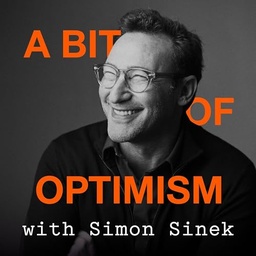
 Simon Sinek
The Power of Doing One Thing Exceptionally Well with Gymshark CEO Ben Francis | A Bit of Optimism
Simon Sinek and Ben Francis on gymshark CEO Ben Francis on focus, community, and longevity mindset.
In this episode of Simon Sinek, featuring Simon Sinek and Ben Francis, The Power of Doing One Thing Exceptionally Well with Gymshark CEO Ben Francis | A Bit of Optimism explores gymshark CEO Ben Francis on focus, community, and longevity mindset Ben Francis explains how Gymshark’s long-term goal of becoming a 100-year brand drives ruthless focus on “We Do Gym” rather than expanding into adjacent categories like sports, hiking, or swimwear.
At a glance
WHAT IT’S REALLY ABOUT
Gymshark CEO Ben Francis on focus, community, and longevity mindset
- Ben Francis explains how Gymshark’s long-term goal of becoming a 100-year brand drives ruthless focus on “We Do Gym” rather than expanding into adjacent categories like sports, hiking, or swimwear.
- The conversation highlights how Gymshark started with very small ambitions—simply making a first online sale—and evolved through incremental learning, failures, and product-driven community building.
- Francis describes a key leadership shift: separating personal ambition from what the business needs, including temporarily hiring an external CEO so the company could scale while he learned.
- They discuss how narrowing the product range improves brand clarity, product quality, and operational efficiency, illustrated by Gymshark’s niche “Onyx” launch becoming its biggest ever.
- Francis ties sustainability to profitability, reinvestment, and in-house capabilities, arguing that long-term resilience comes from staying profitable while prioritizing brand, community, and people development.
IDEAS WORTH REMEMBERING
7 ideasUse a long-term horizon to simplify strategy, not complicate it.
Francis says the 100-year lens clarified what is and isn’t Gymshark, leading to a tighter identity (“We Do Gym”) and fewer distractions from adjacent markets.
Start with “small wins” ambitions to build momentum and learning.
Gymshark began with the humble goal of making a first sale, then gradually scaled targets; Francis argues low initial ambition can reduce pressure and accelerate practical progress.
Category expansion can dilute brand and weaken execution.
Gymshark broadened into near-gym categories (swim/hike/sportswear) but found it created a “long tail” of weaker products and watered-down brand meaning, so they narrowed back down.
Focus improves unit economics and product quality simultaneously.
Selling more of fewer products increases supplier leverage, concentrates development resources, and aligns the entire company behind a single direction—like a restaurant with a small menu.
Separate what you want personally from what the business needs right now.
Francis stepped aside for an experienced CEO during a growth phase, prioritizing company success over ego, then returned later when better equipped.
Protect brand consistency globally; localize commercial tactics, not identity.
He cites a mistake giving the US team too much brand freedom, resulting in “Nike with a Gymshark logo,” and learned to centralize brand/product while tailoring go-to-market execution by market.
Long-term hiring emphasizes careers and capability-building over quick fixes.
Francis prefers leaders who will build for 10–30 years, invests in in-house sampling/technical expertise, and avoids over-optimizing short-term P&L at the expense of core competence.
WORDS WORTH SAVING
5 quotesWe do gym.
— Ben Francis
We wanna be a brand that lasts longer than, than myself or anyone here at this business.
— Ben Francis
Set the bar so incredibly low... and just incrementally build that thing.
— Ben Francis
We don't care what you've done. We care what you're gonna do.
— Simon Sinek (quoting Apple culture)
We probably lost 18 to 24 months just because of that mistake.
— Ben Francis
QUESTIONS ANSWERED IN THIS EPISODE
5 questionsWhat specific criteria do you use today to decide whether an opportunity is a “temptation” versus a truly Gymshark-aligned move?
Ben Francis explains how Gymshark’s long-term goal of becoming a 100-year brand drives ruthless focus on “We Do Gym” rather than expanding into adjacent categories like sports, hiking, or swimwear.
How did “We Do Gym” change your product roadmap in practice (e.g., what got cut, what got funded)?
The conversation highlights how Gymshark started with very small ambitions—simply making a first online sale—and evolved through incremental learning, failures, and product-driven community building.
Can you break down what made the Onyx launch so successful—product design choices, messaging, audience targeting, and operational planning?
Francis describes a key leadership shift: separating personal ambition from what the business needs, including temporarily hiring an external CEO so the company could scale while he learned.
When you narrowed the product range, what internal resistance did you face (merchandising, growth teams, investors), and how did you manage it?
They discuss how narrowing the product range improves brand clarity, product quality, and operational efficiency, illustrated by Gymshark’s niche “Onyx” launch becoming its biggest ever.
What are the concrete hiring signals that someone wants to build a 10–20 year career rather than use Gymshark as a stepping stone?
Francis ties sustainability to profitability, reinvestment, and in-house capabilities, arguing that long-term resilience comes from staying profitable while prioritizing brand, community, and people development.
EVERY SPOKEN WORD
Install uListen for AI-powered chat & search across the full episode — Get Full Transcript
Get more out of YouTube videos.
High quality summaries for YouTube videos. Accurate transcripts to search & find moments. Powered by ChatGPT & Claude AI.
Add to Chrome