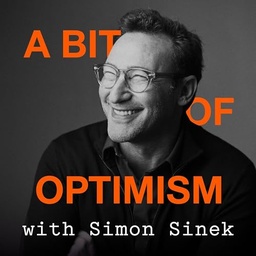
 Simon Sinek
Kids (And Employees) Know More Than You Think with Dr. Becky Kennedy | A Bit of Optimism Podcast
Simon Sinek and Dr. Becky Kennedy on parenting wisdom as leadership: sturdiness, boundaries, triggers, and resilience-building skills.
In this episode of Simon Sinek, featuring Dr. Becky Kennedy and Simon Sinek, Kids (And Employees) Know More Than You Think with Dr. Becky Kennedy | A Bit of Optimism Podcast explores parenting wisdom as leadership: sturdiness, boundaries, triggers, and resilience-building skills In crises, kids (and employees) feel safer with clear, truthful narratives than with hidden uncertainty or false reassurance.
At a glance
WHAT IT’S REALLY ABOUT
Parenting wisdom as leadership: sturdiness, boundaries, triggers, and resilience-building skills
- In crises, kids (and employees) feel safer with clear, truthful narratives than with hidden uncertainty or false reassurance.
- Good Inside frames misbehavior as “feelings without skills,” shifting adults from blaming and punishment to teaching regulation and problem-solving.
- The conversation critiques “fault”-based thinking and shows how shame blocks learning, while curiosity and structure build competence.
- Kennedy defines boundaries as actions you will take that require nothing from the other person, making boundaries enforceable and relationship-preserving.
- Triggers are unhealed, body-held memories that surface in present relationships; changing how we treat ourselves is the prerequisite to changing how we lead and relate to others.
IDEAS WORTH REMEMBERING
7 ideasGive kids (and teams) a story; uncertainty is the real threat.
Kennedy argues that lack of information is more frightening than hard information, so name what’s changing, what you know, what you don’t know, and reaffirm the leader’s job to keep people safe.
Drop the obsession with fault; optimize for learning instead.
Fault invites shame, and shame causes freezing—an anti-learning state; focusing on skills and repair creates growth without identity damage (e.g., “bad thing happened” vs. “bad kid/employee”).
Reframe misbehavior as “feelings without skills.”
Kids are born good inside and arrive with intense emotions but few regulation tools; leveling up skills (not suppressing feelings) changes behavior now and builds lifelong resilience.
Lead with intention, not catharsis.
“Someone feels your intention more than your intervention”—whether you’re parenting or managing, venting frustration may feel good but erodes safety and blocks improvement.
Use collaborative problem-solving to build competence and accountability.
Instead of “catching” someone with gotcha questions, state shared expectations and work together on a concrete system (e.g., Post-it reminder for closing the door), then set a clear deadline to follow through.
Boundaries are commitments about what you will do, not demands about what others must do.
A real boundary is enforceable because it requires nothing from the other person (e.g., “If you come unannounced, I won’t host a visit”); saying “they don’t respect my boundary” often signals it wasn’t a boundary.
When conflict escalates, listen for the underlying wish.
People intensify demands when they don’t feel believed; responding to the need underneath (e.g., “you want more access to the kids”) reduces escalation and opens negotiation without surrendering your limits.
WORDS WORTH SAVING
7 quotesInformation doesn't scare kids as much as a lack of information scares kids.
— Dr. Becky Kennedy
I don't think Good Inside is a parenting approach. It's a leadership approach.
— Dr. Becky Kennedy
They're born with all the feelings and none of the skills.
— Dr. Becky Kennedy
Someone feels your intention more than they feel your intervention.
— Dr. Becky Kennedy
A boundary is something you tell someone you will do, and it requires the other person to do nothing.
— Dr. Becky Kennedy
Triggers are memories of our past that are interrupting in the present.
— Dr. Becky Kennedy
Anger is our best feeling because it tells us what we want and we're not getting.
— Dr. Becky Kennedy
QUESTIONS ANSWERED IN THIS EPISODE
5 questionsIn the fires/COVID examples, what specific phrases best balance truth-telling with not overwhelming a child—how would you tailor it by age?
In crises, kids (and employees) feel safer with clear, truthful narratives than with hidden uncertainty or false reassurance.
Kennedy says “fault is inherently shameful”; where (if anywhere) does responsibility/accountability fit without activating shame?
Good Inside frames misbehavior as “feelings without skills,” shifting adults from blaming and punishment to teaching regulation and problem-solving.
How would you apply “feelings without skills” to an underperforming employee—what does “skill-building” look like in a performance conversation?
The conversation critiques “fault”-based thinking and shows how shame blocks learning, while curiosity and structure build competence.
Using Kennedy’s boundary definition, what are examples of “fake boundaries” leaders commonly set at work (e.g., around after-hours messages), and how do you rewrite them as real ones?
Kennedy defines boundaries as actions you will take that require nothing from the other person, making boundaries enforceable and relationship-preserving.
When a parent-in-law (or colleague) sets an unreasonable boundary/demand, what’s a step-by-step script for identifying the “wish underneath” while still refusing the demand?
Triggers are unhealed, body-held memories that surface in present relationships; changing how we treat ourselves is the prerequisite to changing how we lead and relate to others.
EVERY SPOKEN WORD
Install uListen for AI-powered chat & search across the full episode — Get Full Transcript
Get more out of YouTube videos.
High quality summaries for YouTube videos. Accurate transcripts to search & find moments. Powered by ChatGPT & Claude AI.
Add to Chrome