Mark Zuckerberg's podcast interviews: which to watch and why
Start with his second Dwarkesh Podcast interview, on AI strategy, or sample seven stretches in a 79-minute crash course.
Every quote checked against its transcript
If you watch one
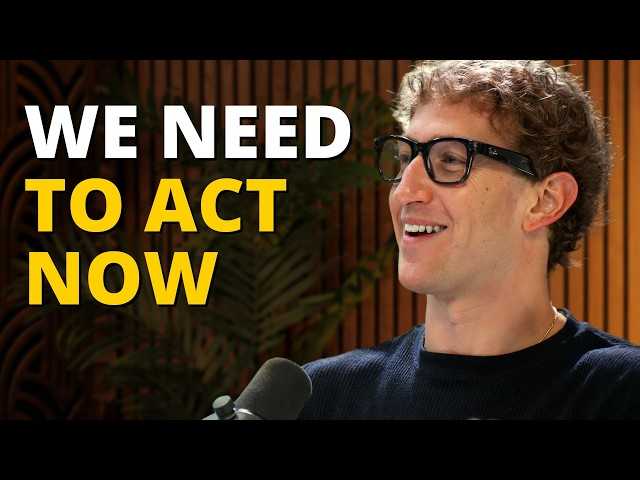
The clearest map of his AI strategy
 Play episode
By playing, you agree to uListen's Terms and Privacy Policy and YouTube's Terms of Service.
AI writing Meta's code, 12:10 · AI friends, 27:21 · Why AI may add jobs, 1:11:53
Dwarkesh Podcast (April 29, 2025). A year after their Llama 3 conversation, Dwarkesh Patel steelmans rival labs and pushes on the bear cases, and Zuckerberg answers at length. He covers Llama 4 and why he thinks leaderboards are easy to game, his prediction that AI will write most of the code for Meta's Llama work within 12 to 18 months, and why he doubts a fast takeoff. Then come AI friends, glasses, ads versus paid tiers and why AI may add jobs rather than cut them. He speaks 83% of the words, and no other episode here covers as much of his AI thinking in 76 min.
On uListen: summary · chapters · transcript
Or start with
 12 min
Founders and strategists
Acquired ft. Ben Gilbert & David Rosenthal (September 18, 2024). Recorded live on stage, it is his own account of Meta's history, from the Yahoo offer and the failed HTML5 bet to the post-2016 politics he calls a twenty-year mistake (42:06 to 53:57, 12 min).
 20 min
Following the free speech debate
The Joe Rogan Experience (January 10, 2025). He explains why, in his account, Meta drifted toward censorship after 2016 and COVID, and why he is reversing course (0:19 to 19:58, 20 min).
 13 min
Curious about the person, not the CEO
Tim Ferriss (March 24, 2022). He talks about fencing and Latin and being an introvert, and his most personal stretch covers the nightly good night things with his daughters and the growing place of faith in his life (1:09:11 to 1:22:39, 13 min).
one course
Want the best stretches back to back
The crash course. Seven clips from seven episodes, played one after another.
A guided watch
The Mark Zuckerberg crash course
Seven stretches from seven episodes: how he runs Meta, then the hard questions he faces, then the bets he is making.
Total: about 79 minutes.
Play all · 79 minHow he runs Meta
- Learning faster than everyone 14 min
18:40 to 32:10, 14 min of Acquired ft. Ben Gilbert & David Rosenthal (September 18, 2024): why he thinks Meta survives every wave, with engineers in leadership, products shipped close to embarrassment and good ideas copied without shame.
- Long bets and a cohesive team 10 min
11:18 to 21:23, 10 min of Tim Ferriss (March 24, 2022): how he handles doubt about big bets, why only a lack of cohesion on his team costs him sleep, and the hour of foiling that resets him after the morning's bad news.
The hard questions
- Moderation at the scale of billions 16 min
26:10 to 42:22, 16 min of The Joe Rogan Experience (January 10, 2025): why he prefers community notes to fact-checkers, and why he thinks demanding higher classifier precision, more than dropping fact-checkers, cuts wrongful takedowns.
- Intelligence is not autonomy 17 min
2:11:20 to 2:28:01, 17 min of Lex Fridman Podcast (June 8, 2023): his neocortex analogy for AI risk, his answer on power and openness, and the idea that companies and markets are already smarter than any one person.
The bets
- Giving away a $10 billion model 8 min
1:05:37 to 1:13:17, 8 min of Dwarkesh Podcast (April 18, 2024): the business case for open source, from the Open Compute precedent and efficiency gains he values in the billions to his frustration with Apple's gatekeeping.
- A room full of holograms 7 min
21:43 to 29:08, 7 min of Lex Fridman Podcast (September 28, 2023): his case that the real world is physical plus digital, with embodied AI coworkers and photorealistic avatars as a bridge to acceptance.
- Tools to cure disease 7 min
1:07 to 8:33, 7 min of a16z (Andreessen Horowitz) (November 6, 2025): why he thinks breakthroughs follow new tools, the gap that small government grants leave for philanthropy, and why the Biohub pairs frontier AI with frontier biology.
Lately
His three most recent appearances here, from November 6, 2025 and June 10, 2026, are joint interviews with Priscilla Chan about the Biohub rather than Meta. Earlier episodes mention the goal of curing all disease, and on Huberman Lab with Andrew Huberman (October 23, 2023) he describes training a virtual cell model (29:53); these three show how the plan has grown and how much of it now rests on AI.
- 28:58The Biohub becomes the main thrust of their philanthropy, run as one team
- 28:47An AI researcher who led the Evolutionary Scale team now runs the whole science program, which he reads as a bet on AI
- 24:24He names specific models, including VariantFormer and a diffusion model that generates synthetic cells
- 50:53He asks scientists to choose problems that generate data to make models smarter
- 39:08He carries his case against a central superintelligence over to science, while saying open biology models must be balanced against biosafety considerations
“people thought that by the end of the century was a stretch. Now I think it's, like, uh, too conservative.”
Zuckerberg on ...
Mark Zuckerberg on open source AI and Llama
Zuckerberg argues that open source AI is both safer and better business: models that many people inspect get hardened, as open software does, and building Meta's own models means no other platform can tell it what to build.
“there's a level of kind of control of your own destiny that you only get when you, when you build this stuff yourself.”
Go deeper: 38:17 to 54:41, 16 min · Dwarkesh Podcast (April 18, 2024).
More on open source AI and Llama 4 moments
On Lex Fridman Podcast (June 8, 2023) he recounts the research-only release of the first Llama, which leaked, and argues that with models far from superintelligence the balance favored openness (27:50). On Dwarkesh Podcast (April 18, 2024) he says he would hold back a model if a qualitative change made release irresponsible (38:38), and that community work making models even 10% cheaper to run would save Meta billions (1:07:08). On Dwarkesh Podcast (April 29, 2025) he defends the license's limit on the largest companies and worries that rivals are only dabbling, the way Android drifted closed (47:07).
Mark Zuckerberg on AI coding and the future of work
Zuckerberg expects AI agents to write most of the code for Meta's AI research soon, yet argues AI will raise demand for workers, because tools that take over most of a task make new services worth offering.
“you, like, create things that take away 90% of the work, and that leads you to want more people, not less.”
Go deeper: 12:10 to 21:22, 9 min · Dwarkesh Podcast (April 29, 2025).
More on AI coding and the future of work 5 moments
On The Joe Rogan Experience (January 10, 2025) he predicted that Meta and other labs would have an AI working like a mid-level engineer that year (2:08:16). On Dwarkesh Podcast (April 29, 2025) he puts most of the code for Meta's Llama work 12 to 18 months out, meaning agents that take a goal and run tests, not autocomplete (14:08). He doubts a fast takeoff partly because Meta's ads team already has more good ideas than compute or test users (18:46). On jobs, he points to farming shrinking to about 2% of people on The Joe Rogan Experience (January 10, 2025) (2:09:44), and to phone support Meta never offered because it would cost 10 to 20 billion dollars a year; if AI makes it viable, he thinks Meta would probably hire more support staff (1:11:53).
Mark Zuckerberg on AI safety and long-term risks
Zuckerberg separates intelligence from autonomy: he argues today's AI shows intelligence can exist without will or consciousness, so the danger lies in runaway autonomy and in one company or government holding the strongest systems.
“relatively simple and unintelligent things that have runaway autonomy and just spread themselves or, you know, it's like, uh, we have a word for that. It's a virus, right?”
Go deeper: 2:10:38 to 2:28:01, 17 min · Lex Fridman Podcast (June 8, 2023).
More on AI safety and long-term risks 4 moments
There he also worries that focusing on tail risks distracts from near-certain harms such as fraud and scams. On Dwarkesh Podcast (April 18, 2024) he concedes that bad actors can strip safeguards from open models, and says it makes sense to think about bioweapons (42:28), but doubts an overnight jump to extreme intelligence because physical constraints slow it (35:36). On The Joe Rogan Experience (January 10, 2025) he draws the same line between intelligence and will (2:12:47), says reasoning models need careful guardrails, and argues that widely deployed AI lets one system defend itself against another (2:18:34).
Mark Zuckerberg on AI companions, personas and social impact
Zuckerberg expects people to use many AIs rather than one, from assistants and business agents to creator AIs and invented characters, and he frames AI companionship as filling unmet demand for connection rather than replacing friends.
Go deeper: 32:51 to 43:42, 11 min · Lex Fridman Podcast (September 28, 2023).
More on AI companions, personas and social impact 4 moments
On Dwarkesh Podcast (April 29, 2025) he cites a stat that the average American has fewer than three friends but wants around 15 (29:40), and says people already use Meta AI to rehearse hard conversations. On Huberman Lab with Andrew Huberman (October 23, 2023) he insists creators control any AI version of themselves: “if anyone is creating, like, an AI assistant version of you, it should be something that you control” (2:07:46). On Lex Fridman Podcast (September 28, 2023) he explains that because models are not yet predictable enough to stand in for a real person, Meta began with invented characters played by well-known people, such as Snoop Dogg as a dungeon master (40:15). Asked there about talking with loved ones who have died, he says reliving memories might help some grieving people but could become unhealthy, and that, not being an expert, he thinks it would need study (33:46).
Mark Zuckerberg on VR, smart glasses and the metaverse
Zuckerberg's case for the metaverse rests on presence, the feeling of actually being with someone, and on his view that the real world is the physical and digital combined; glasses, he argues, are the ideal device for an AI that sees and hears what you do.
“I think that there's a physical world and a digital world, and the real world is actually both.”
Go deeper: 7:10 to 25:37, 18 min · Lex Fridman Podcast (February 26, 2022).
More on VR, smart glasses and the metaverse 4 moments
There he says presence comes from getting small cues right, such as spatial audio, hands shown without arms and eye contact (7:46). On Lex Fridman Podcast (September 28, 2023) he predicts rooms with as many holograms as physical objects, maybe by the end of the decade (22:59). On Acquired ft. Ben Gilbert & David Rosenthal (September 18, 2024) he says he once expected AR holograms to arrive before full-scale AI and now expects the reverse, which is why he had Ray-Ban Meta pivoted to make Meta AI its main feature (17:26). For input, on The Joe Rogan Experience (January 10, 2025) he describes a wrist band that reads neural signals and, in later versions, will need no visible hand movement (2:00:14).
Mark Zuckerberg on content moderation and free speech
Zuckerberg says he never wanted Meta to decide what is true; his fixes, from an independent Oversight Board to community notes and stricter classifier confidence, aim to move hard calls away from the company and cut wrongful takedowns.
Go deeper: 1:14:18 to 1:25:52, 12 min · Lex Fridman Podcast (February 26, 2022).
More on content moderation and free speech 5 moments
On The Joe Rogan Experience (January 10, 2025) he says he gave too much deference to the media after 2016 (3:34), and that Biden administration officials pushed Meta to remove true posts about vaccine side effects, which Meta refused to do (7:34 to 14:43). On Lex Fridman Podcast (February 26, 2022) he said a deadly pandemic plausibly met the acute-harm bar for limiting speech (1:24:47), and on Lex Fridman Podcast (June 8, 2023) that some establishment calls for censorship during COVID proved debatable or true (1:14:41). On The Joe Rogan Experience (June 27, 2024) he recounts reducing the Hunter Biden laptop story's reach for five to seven days after an FBI warning, and compares the outcome to being acquitted after a trial (1:47:54 to 1:51:02).
Mark Zuckerberg on leadership and running Meta
Zuckerberg defines Meta's strategy as learning faster than every other company, which in his telling means shipping before things are polished and keeping engineers in leadership; he also argues that a cohesive core team can get a company through almost any challenge.
Go deeper: 37:44 to 52:11, 14 min · Tim Ferriss (March 24, 2022).
More on leadership and running Meta 5 moments
There he walks through Meta's six values and argues that a value is only useful if a good company could reasonably choose the opposite (39:37). What costs him sleep, he says, is not the stock price or competitors but a lack of cohesion on his team (16:31). On Lex Fridman Podcast (June 8, 2023) he explains flattening Meta after finding its managers averaged about three reports (1:49:36), and gives this hiring rule: “you should only hire someone to be on your team if you would be happy working for them in an alternate universe.” (1:53:14). He offers a version of it on Lex Fridman Podcast (February 26, 2022) too (1:43:48).
Mark Zuckerberg on curing disease and the Biohub
Zuckerberg says he and Priscilla Chan will not cure diseases themselves: because most breakthroughs follow a new way to observe, they build tools, pairing frontier biology labs with frontier AI so the whole field moves faster.
“if you look at the history of science, most major breakthroughs are basically preceded by the invention of a new tool to observe phenomena in a new way”
Go deeper: 19:11 to 27:48, 9 min · a16z (Andreessen Horowitz) (November 6, 2025).
More on curing disease and the Biohub 6 moments
He likens biology without such tools to fixing code you cannot step through, on Huberman Lab with Andrew Huberman (October 23, 2023) (12:14) and again on a16z (Andreessen Horowitz) (3:32). On No Priors ft. Sarah Guo & Elad Gil (June 10, 2026) he wants the models built in layers, from proteins to cells to systems like the immune system (11:08), and argues that data is even more of a constraint than compute (18:21). On timing, on Lex Fridman Podcast (February 26, 2022) he called curing, preventing or managing all diseases a possible goal for this century, while doubting a world with no disease at all within the next several decades (1:50:11); on Latent Space (November 6, 2025) he says the pace of AI may make the goal possible significantly sooner than the end of the century, though he won't name a date (8:19).
Stories he tells
The stories that return, and where he tells them most fully.
Told in 2 episodes
The disguised jiu-jitsu tournament
He signed up under his first and middle name and showed up in sunglasses, a hat and a COVID mask.
2 min · Fullest tellingTold in 2 episodes
Turning down a billion dollars
When Yahoo made its offer in 2006, his team wanted to sell and the board tried to fire him; he refused.
2 min · Fullest tellingTold in 3 episodes
Open Compute
Meta gave away its server and data center designs, the industry standardized on them, and Meta saved billions.
1 min · Fullest tellingTold in 3 episodes
Hands without arms
Early VR avatars with arms felt to users like a broken elbow, while floating hands felt right.
1 min · Fullest tellingTold in 2 episodes
The good night things
Each night his daughters name their health, their family and friends, something they look forward to and how they helped someone.
3 min · Fullest tellingTold in 2 episodes
Fencing plans in chemistry class
In high school he wrote out sequences of moves in class to try in that afternoon's bouts.
1 min · Fullest tellingTold in 2 episodes
Augustus and the idea of peace
Augustus tried to turn a war economy into a positive-sum one, which he likens to how investors misread open source and to the creator economy.
2 min · Fullest tellingTold in 3 episodes
The mood that turned after 2016
He says sentiment about the company was positive almost every month before the 2016 election and negative almost every month after.
5 min · Fullest tellingTold in 2 episodes
Snoop Dogg, dungeon master
Meta's first AI characters were invented personas played by well-known people, and he uses Snoop Dogg's text adventures for bedtime stories with his daughter.
1 min · Fullest tellingWhere else he tells each story
- The disguised jiu-jitsu tournament. He signed up under his first and middle name and showed up in sunglasses, a hat and a COVID mask. Fullest on The Joe Rogan Experience (January 10, 2025) (1:13:58 to 1:15:47); also on Lex Fridman Podcast (June 8, 2023) (1:07).
- Turning down a billion dollars. When Yahoo made its offer in 2006, his team wanted to sell and the board tried to fire him; he refused. Fullest on Acquired ft. Ben Gilbert & David Rosenthal (September 18, 2024) (49:26 to 51:01); also on Dwarkesh Podcast (April 18, 2024), where he explains he would only have gone and built another company like it (7:52).
- Open Compute. Meta gave away its server and data center designs, the industry standardized on them, and Meta saved billions. Fullest on Acquired ft. Ben Gilbert & David Rosenthal (September 18, 2024) (33:23 to 34:49); also on Dwarkesh Podcast (April 18, 2024) (1:06:00) and Lex Fridman Podcast (June 8, 2023) (21:37).
- Hands without arms. Early VR avatars with arms felt to users like a broken elbow, while floating hands felt right. Fullest on The Joe Rogan Experience (June 27, 2024) (4:19 to 5:36); also on Lex Fridman Podcast (February 26, 2022) (10:27) and The Joe Rogan Experience (January 10, 2025) (1:53:46).
- The good night things. Each night his daughters name their health, their family and friends, something they look forward to and how they helped someone. Fullest on Tim Ferriss (March 24, 2022) (1:13:37 to 1:16:10); also on Lex Fridman Podcast (February 26, 2022) (1:40:12).
- Fencing plans in chemistry class. In high school he wrote out sequences of moves in class to try in that afternoon's bouts. Fullest on Tim Ferriss (March 24, 2022) (1:28 to 2:50); also, more briefly, on The Joe Rogan Experience (January 10, 2025) (1:23:25).
- Augustus and the idea of peace. Augustus tried to turn a war economy into a positive-sum one, which he likens to how investors misread open source and to the creator economy. Fullest on Dwarkesh Podcast (April 18, 2024) (1:01:57 to 1:03:35); also on Tim Ferriss (March 24, 2022) (4:58).
- The mood that turned after 2016. He says sentiment about the company was positive almost every month before the 2016 election and negative almost every month after. Fullest on Acquired ft. Ben Gilbert & David Rosenthal (September 18, 2024) (42:32 to 47:09); also on Lex Fridman Podcast (February 26, 2022) (55:18) and Tim Ferriss (March 24, 2022) (1:19:23).
- Snoop Dogg, dungeon master. Meta's first AI characters were invented personas played by well-known people, and he uses Snoop Dogg's text adventures for bedtime stories with his daughter. Fullest on Huberman Lab with Andrew Huberman (October 23, 2023) (2:10:37 to 2:12:00); he explains the personas the same way, in different words, on Lex Fridman Podcast (September 28, 2023) (40:15).
Every episode
Across these conversations Zuckerberg talks about building Meta, AI, VR and glasses, content moderation, his family and, more and more, curing disease. The two earliest, from February 26, 2022 and March 24, 2022, center on the metaverse, Meta's culture, his critics and home life; from June 8, 2023 on, Llama and open source AI come up in most interviews, and moderation runs through the Lex Fridman and Joe Rogan episodes. His three most recent, from November 6, 2025 and June 10, 2026, are about the Biohub. This guide shows where to start, the best stretches to watch, what each episode teaches and which stories he tells on more than one show.
13 conversations · About 22 hours · Videos from YouTube
20261 episodes
 56 min
The Biohub's AI bet, with Chan and Alex Rives
“Curing All Disease by next century is too conservative" - Mark Zuckerberg
Who it’s for, and what you’ll learn
Best for: Listeners interested in AI for biology, and anyone weighing a nonprofit against a venture model for deep science.
On uListen: summary · chapters · transcript
A relaxed, technical joint interview with Priscilla Chan and Biohub head Alex Rives, in which Elad Gil and Sarah Guo ask investor-style questions about strategy, talent and drug development.
You'll learn:
- Why he thinks data, even more than compute, holds biology models back: “In order to get the data, it's not just like there's some factory somewhere that you can pay to produce the, the data.” (18:21).
- How patient groups willing to try experimental drugs could change the economics of rare disease (36:36).
- Why he thinks the Biohub can attract the AI talent it needs: a strong group of a dozen or two is enough, and the mission draws people (44:08).
Zuckerberg speaks 39% of the words
20254 episodes
 45 min
Inside the virtual cell roadmap
Mark Zuckerberg & Priscilla Chan: How AI Will Cure All Disease
Who it’s for, and what you’ll learn
Best for: AI and biotech people who want specifics on virtual cell models and how the Biohub is organized; parts of his answers repeat on Latent Space (November 6, 2025).
On uListen: summary · chapters · transcript
A warm joint interview with Priscilla Chan, in which two a16z hosts mix venture framing with technical biology; she covers the medicine, he the strategy and AI modeling.
You'll learn:
- How he explains biology's missing tools to engineers: “it's kind of like you're coding without being able to step through the code and debug things” (3:32).
- What VariantFormer learns from cells before and after a CRISPR edit (24:24).
- Why he thinks many organizational problems are fixed by seating teams together: “it's interesting how many organizational questions or problems you can fix just by having two teams sit together.” (36:54).
Zuckerberg speaks 40% of the words
 54 min
Frontier biology lab meets frontier AI lab
Priscilla Chan and Mark Zuckerberg: Frontier AI + Virtual Biology To Solve All Diseases
Who it’s for, and what you’ll learn
Best for: AI researchers, engineers and funders thinking about AI for science; less useful for questions about Meta's products.
On uListen: summary · chapters · transcript
A technical, friendly joint interview with Priscilla Chan, recorded at the CZI Imaging Institute, with hosts who frame biology in AI-lab terms such as benchmarks and abstraction layers.
You'll learn:
- What he expects models to do long before they could replace the wet lab, if they ever do: “you're going to be able to have models that can help generate hypotheses, and scientists can apply their taste on which ideas or k-kind of suggestions come from this are worth testing” (27:02).
- What curing all disease means in practice: catching problems early, such as a possibly cancerous mutation (38:41).
- Why he thinks the timeline depends more on the pace of AI than on biology (48:42).
Zuckerberg speaks 50% of the words
 1 hr 16 min
Llama 4, coding agents, AI friends and jobs
Mark Zuckerberg - AI will write most Meta code in 18 months
Who it’s for, and what you’ll learn
Best for: Anyone who wants his AI strategy in one sitting: open source, coding agents, AGI timelines, AI companions, glasses, ads and jobs.
On uListen: summary · chapters · transcript
A dense, analytical one-on-one in which Dwarkesh Patel steelmans other labs' views and Zuckerberg thinks out loud at length.
You'll learn:
- Why he thinks leaderboards are easy to game: his team easily tuned a Llama 4 Maverick variant to the top of Chatbot Arena, while the released model had no such tuning and ranks lower (8:18).
- Which kinds of distillation from foreign models he considers safe (53:39).
- Why he expects AI to make culture funnier and weirder (1:09:56).
Zuckerberg speaks 83% of the words
2 hr 51 minThe moderation reset, jiu-jitsu and Apple
Joe Rogan Experience #2255 - Mark Zuckerberg
Who it’s for, and what you’ll learn
Best for: Readers who want his own account of the moderation reversal and government pressure, plus his martial arts life.
On uListen: summary · chapters · transcript
A loose, nearly three-hour sit-down that opens on Meta's moderation changes and wanders through jiu-jitsu, hunting, VR, AI and Apple, with Joe Rogan steering through long tangents.
You'll learn:
- Why, in his view, classifier precision drives wrongful takedowns: “if you're at, you know, 90% precision, that means one out of ten things that the classifier takes down is not actually problematic.” (32:21).
- Why he thinks the US should defend its tech companies abroad: “the US government should be defending its companies, right? Not be the tip of the spear attacking its companies.” (22:01).
- What fighting gives him that business often doesn't: a fast feedback loop (1:07:32).
Zuckerberg speaks 67% of the words
20243 episodes
1 hr 27 minMeta's history, told live on stage
The Mark Zuckerberg Interview
Who it’s for, and what you’ll learn
Best for: Founders and strategists who want Meta's history in his own words and how it shapes his bets on glasses and open source, and his view of Apple as a rival.
On uListen: summary · chapters · transcript
Recorded live in front of an arena crowd at Chase Center, with Ben Gilbert and David Rosenthal trading a thesis about Meta's survival and detours into its history.
You'll learn:
- Why he ranks his post-2016 political misreading far above the IPO as a mistake: “if the IPO was a year-and-a-half mistake, I think that the political miscalculation was a twenty-year mistake.” (45:38).
- How the 2012 HTML5 bet failed and forced a year-long native rewrite (37:04).
- The good-versus-awesome test he took from early Oculus people, and why he calls social media only good (56:03).
Zuckerberg speaks 63% of the words
 2 hr 54 min
Presence, feed ranking and the laptop story
Joe Rogan Experience #1863 - Mark Zuckerberg
Who it’s for, and what you’ll learn
Best for: Readers who want his longest relaxed case for the metaverse, plus his most detailed answers on feed ranking and moderation.
On uListen: summary · chapters · transcript
A loose, nearly three-hour talk that opens on the new headset Rogan has just tried and later turns to moderation; on-air details, such as his children being six and five here but nine and seven on his January 10, 2025 Rogan visit, suggest it was recorded well before its listed date.
You'll learn:
- Why Facebook ignores angry reactions when deciding what to spread: “but I'm not here to design a service that makes people angry.” (1:25:59).
- How a wrist band could read signals from little-used motor-neuron pathways (43:18).
- Why he thinks Facebook won: “I think, like, kind of care is probably undervalued in terms of determining what, who ends up doing what in the world.” (2:36:01).
Zuckerberg speaks 72% of the words
 1 hr 19 min
Llama 3, compute, energy and open source
Mark Zuckerberg - Llama 3, $10B models, Caesar Augustus, & 1 GW datacenters
Who it’s for, and what you’ll learn
Best for: Listeners who want his most technical case for open source AI and Meta's compute buildout, with real pushback.
On uListen: summary · chapters · transcript
A dense technical interview in which Dwarkesh Patel pushes back with concrete hypotheticals and mixes in questions about history.
You'll learn:
- How falling behind TikTok on Reels left Meta with a GPU stockpile (5:06).
- Why he expects energy to limit AI scaling before money does: “But I actually think before we hit that, you're gonna run into energy constraints, right?” (28:06).
- Why he can't stop building: “like constitutionally, like, I'm doing something wrong if I'm not building something new.” (58:35).
Zuckerberg speaks 80% of the words
20233 episodes
 2 hr 16 min
CZI science, then glasses and mixed reality
Curing All Human Diseases & the Future of Health & Technology | Mark Zuckerberg & Dr. Priscilla Chan
Who it’s for, and what you’ll learn
Best for: Readers who want his thinking on AI for biology and his hardware philosophy in a friendly, non-adversarial setting.
On uListen: summary · chapters · transcript
A long, warm conversation in the couple's home: the first hour with Dr. Priscilla Chan on CZI science, the second one on one about social media, VR, glasses and AI personas.
You'll learn:
- Why he treats language models as hypothesis generators in science (31:04).
- His test for the risk of a new technology: “the bar shouldn't be is it possible to do anything bad, it's does this new technology make it easier to do something bad than what people already had?” (1:58:27).
- Why he separates the real room from the physical room (1:35:51).
Zuckerberg speaks 49% of the words
 1 hr 5 min
An interview as photorealistic avatars
Mark Zuckerberg: First Interview in the Metaverse | Lex Fridman Podcast #398
Who it’s for, and what you’ll learn
Best for: Readers who want his fullest explanation of Codec Avatars, plus a snapshot of Quest 3, Meta's first AI personas and Llama 2.
On uListen: summary · chapters · transcript
A demo-style conversation recorded inside the metaverse, with both men appearing as photorealistic Codec Avatars from hundreds of miles apart and Lex Fridman openly awestruck.
You'll learn:
- How Codec Avatars send an encoded model of your face instead of video (2:44).
- Why he would like an avatar more expressive than his own face: “I- I always get a lot of, um, critique and- and shit for, um, for- for having like a relatively stiff, uh, expression.” (9:18).
- Why anonymity online weakens good behavior: “if you stiff them, then like, you know, life is a repeat game and that's not gonna work out well for you.” (49:07).
Zuckerberg speaks 75% of the words
 2 hr 42 min
Llama, layoffs, AI risk and faith
Mark Zuckerberg: Future of AI at Meta, Facebook, Instagram, and WhatsApp | Lex Fridman Podcast #383
Who it’s for, and what you’ll learn
Best for: Readers who want his thinking on Llama, AI products and AI risk at the time, plus candid talk on layoffs, org design and his faith.
On uListen: summary · chapters · transcript
A long, friendly in-person talk between jiu-jitsu training partners, moving from his first tournament through Llama, moderation, layoffs and Quest 3 to faith.
You'll learn:
- Why every business will want its own AI rather than a general assistant (45:43).
- How he wants an AI to answer a question about 3D-printing a gun (1:31:20).
- Why he thinks a pure intelligence will struggle to grasp the human condition: “This gets to the question about AI. I don't think that a being is just a mind.” (2:32:39).
Zuckerberg speaks 78% of the words
20222 episodes
1 hr 35 minMeta's new values, parenting and faith
Mark Zuckerberg on Business Strategy, Parenting, Religion, and More
Who it’s for, and what you’ll learn
Best for: Listeners who want him as a manager and a person: culture design, the Sheryl partnership, parenting and faith.
On uListen: summary · chapters · transcript
A relaxed remote interview in which Tim Ferriss mixes in questions from friends and lets him talk at length, including a long walk through Meta's new values.
You'll learn:
- Why a value is only worth writing down if a good company could choose the opposite (39:37).
- Why Meta moved performance reviews from every six months to once a year (43:34).
- What being an introvert means for him: “people kind of think that, that introverts are, like, you know, for, like, don't like other people or something, and that's not true. I just, just get overwhelmed easily.” (1:24:41).
Zuckerberg speaks 79% of the words
 2 hr
Presence, polarization and the meaning of life
Mark Zuckerberg: Meta, Facebook, Instagram, and the Metaverse | Lex Fridman Podcast #267
Who it’s for, and what you’ll learn
Best for: Viewers who want his metaverse product thinking alongside his answers to critics on polarization, teen wellbeing and free speech.
On uListen: summary · chapters · transcript
A long, earnest in-person conversation: a third on the metaverse, then hard questions framed as steel-manning his critics, and a close on death and meaning.
You'll learn:
- Why every controversial content call is negative sum for Meta's brand (57:28).
- Why, citing research, he argues social media is not a major driver of polarization (53:02).
- What he thinks gives life meaning: “human connection is the meaning. And I, I mean, I think that it's a thing that our society probably systematically undervalues.” (1:56:26).
Zuckerberg speaks 73% of the words
What others say about him
Bret Taylor, a guest on 20VC with Harry Stebbings, on how far ahead Zuckerberg looked
PlayAndrew Bosworth, a guest on Lenny's Podcast, on where Meta's ideas come from
PlayMolly Graham, a guest on Lenny's Podcast, on a belief he brought from Facebook to CZI
PlayBen Thompson, a guest on Acquired, on why he thinks the metaverse push is a bad idea
Play
The full quotes
- Bret Taylor, a guest on 20VC with Harry Stebbings, on how far ahead Zuckerberg looked: “Every time you might, uh, get comfortable with a situation, they're always looking out towards the horizon. Uh, I always found Mark Zuckerberg particularly remarkable at this. Uh, every time I thought I was thinking long term, whatever Mark was thinking was about 2X farther in the future than I was thinking. (laughs) And, you know, it was so, uh, disconcerting and motivating for me, uh, when I was there.” (Bret Taylor, 20VC with Harry Stebbings, October 2, 2024, at 1:13:53)
- Andrew Bosworth, a guest on Lenny's Podcast, on where Meta's ideas come from: “Like the ideas that we're pursuing are Mark Zuckerberg's ideas, first and foremost. That's not to say that he's not open to new ones. And he, of course, he is. And that's a form of bottom-up. People can bring ideas to him and he internalizes them and, and acts on them or not. But when he brings the things top-down, he doesn't, he's not micromanaging. He's in the details.” (Andrew 'Boz' Bosworth, Lenny's Podcast with Lenny Rachitsky, March 3, 2024, at 24:23)
- Molly Graham, a guest on Lenny's Podcast, on a belief he brought from Facebook to CZI: “this one is Mark Zuckerberg classic, but he has this like very strong feeling that, uh, people don't escalate enough. And he was like very adamant about it at Facebook. And he brought it to CZI too, where he was like, "Escalation is a tool." And he's like, "P- people get stuck, you know? They get stuck with two people with equal power trying to solve a problem."” (Molly Graham, Lenny's Podcast with Lenny Rachitsky, January 4, 2026, at 1:16:07)
- Ben Thompson, a guest on Acquired, on why he thinks the metaverse push is a bad idea: “As far as the metaverse stuff, I think it's a bad idea. It's very hard to talk about the metaverse'cause it... Like, what are the prospects versus is it, you know, X, Y, Z? I do think that it's not just a bad idea because it's taking so many resources and attention, I think, from Mark Zuckerberg, but also, I just don't think innovation is necessarily born of mass expenditures in large companies.” (Ben Thompson, Acquired ft. Ben Gilbert & David Rosenthal, December 6, 2022, at 1:35:34)
Questions people ask
Which Mark Zuckerberg podcast should I watch first?
Start with Dwarkesh Podcast (April 29, 2025), the broadest look at his AI strategy in 76 min. For Meta's history in his own words, try Acquired ft. Ben Gilbert & David Rosenthal (September 18, 2024) (19:26); for him as a parent and a person, Tim Ferriss (March 24, 2022) (1:09:54).
What did Mark Zuckerberg talk about on Joe Rogan?
There are two Rogan episodes here. On The Joe Rogan Experience (June 27, 2024) he explains VR presence, feed ranking and moderation trade-offs, including his account of the Hunter Biden laptop decision (1:37:55 to 2:00:23, 22 min). On The Joe Rogan Experience (January 10, 2025) he gives his account of Meta's moderation reset and government pressure (0:19 to 19:58, 20 min), then turns to jiu-jitsu, AR glasses, AI and Apple.
Does Mark Zuckerberg think AI will replace programmers?
On Dwarkesh Podcast (April 29, 2025) he expects AI agents to write most of the code for Meta's AI research within 12 to 18 months (13:38). On The Joe Rogan Experience (January 10, 2025) he predicts that much of Meta's code will eventually be built by AI engineers, which he thinks will augment the people working on it (2:08:37). More broadly he argues AI will raise demand for work, and says cheaper support would probably lead Meta to hire more people, not fewer (1:14:00).
What does Mark Zuckerberg say about social media and teen mental health?
On Huberman Lab with Andrew Huberman (October 23, 2023) he argues the effects depend on use: connecting with people goes with long-term wellbeing, while passive consumption is at best entertainment (1:10:18). There he describes teen defaults such as private accounts for anyone under 16 (1:12:28), and on Lex Fridman Podcast (February 26, 2022) says that, in his account, the leaked Instagram research showed neutral or positive effects on 18 or 19 of about 20 measures, with Meta acting on the negative one (1:05:51 to 1:08:17).
What does Mark Zuckerberg say about Apple?
On Acquired ft. Ben Gilbert & David Rosenthal (September 18, 2024) he calls Apple a bigger rival than people realize, in a contest between closed and open platforms (1:08:33). On Dwarkesh Podcast (April 18, 2024) he says Apple has blocked features Meta wanted to launch (1:07:59), and on The Joe Rogan Experience (January 10, 2025), by his back-of-the-envelope estimate, Meta would make about twice the profit without Apple's rules (2:26:11).
Why did Facebook rename itself Meta?
On Acquired ft. Ben Gilbert & David Rosenthal (September 18, 2024) he says the company had become a family of apps, but he refused to rename it just to escape the Facebook brand: “I'm only going to do this when we come up with a brand that is going to be evocative of the future that we're trying to build, because we run towards something, we don't run away from things.” (1:05:40).
How this guide is made
uListen wrote this guide with AI from the full, speaker-labeled transcripts of the 13 episodes above, all from uListen's catalog, plus the four episodes quoted under What others say about him. Every quotation is checked word for word against its transcript, and every time comes from it. We update the guide when a new episode with him joins the catalog. To report a problem, email support@ulisten.ai.